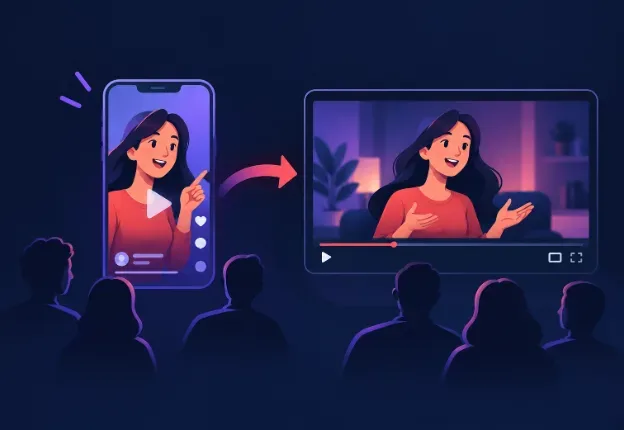
Do YouTube Shorts Help Long-Form Videos? What to Measure
YouTube Shorts can introduce people to your channel, but views and subscribers do not guarantee long-form viewing. Learn how to connect related videos and measure whether your audience follows through.
Summarize This Article with AI
YouTube Shorts can introduce viewers to your longer videos, but a Short gaining views or subscribers does not guarantee that those people will watch long-form content. Give viewers a relevant next video, then check whether your long-form audience actually grows. Treat discovery, subscriptions and continued viewing as separate outcomes.
If your Shorts perform well while longer uploads receive fewer views, start by comparing the topics and audience needs behind each format. The useful question is not simply whether Shorts work. It is whether your Shorts attract people who want the longer experience your channel offers.
Do YouTube Shorts help long-form videos?
They can help people discover your channel and find related content. However, viewers may enjoy a topic in one format without wanting it in another. YouTube explains that its recommendation system can connect interests across formats, while the decision to watch still depends on individual preferences. Publishing different formats does not inherently confuse the algorithm or penalize a channel. See YouTube’s explanation of recommendations across formats.
A useful starting point is to design the Short and longer video together. For example, a short camera demonstration could show one low-light result, while the related full review compares settings, battery life and sample footage. Both pieces serve the same prospective viewer, but each delivers its own value.
Why Shorts views do not always become long-form views
The next video answers a different question
A funny moment from a game may entertain someone who has no interest in a detailed equipment tutorial. Before linking the two, finish this sentence: “Someone who enjoyed this Short would want the longer video because…” If the connection is unclear, choose a better destination.
The Short provides everything that viewer needs
A complete answer can be successful even if the viewer does not continue. Do not hide essential information just to force another click. Offer an optional next step: a worked example, deeper comparison, demonstration or troubleshooting guide.
The longer video does not deliver the promised follow-up
If the Short promises a full demonstration, make that demonstration easy to find. A long introduction or a different subject may disappoint the viewer. Review the opening and remove material that delays the reason someone clicked.
A subscriber is not necessarily an active viewer
A subscription records a choice to follow a channel; it does not prove that the person watches every upload. YouTube recommends looking at monthly audience or unique viewers to understand your active audience more clearly. See YouTube’s audience tips.
How to connect a Short to a relevant video
- Choose one longer video that expands naturally on the Short’s subject.
- Make the Short useful on its own, with a specific reason to watch the longer version.
- In YouTube Studio, open Content and select the Short.
- Select a Related Video from your channel and save.
- Check the Short in the player and confirm that the destination matches your invitation.
YouTube requires advanced feature access to add a related video. The destination must be public or unlisted and meet its Community Guidelines. Viewers see the link below your channel handle. These requirements are documented in YouTube’s related-video instructions.
For example, use “The related video shows the complete three-step setup” when that is exactly what the longer video contains. This is more informative than a general request to visit your channel.
What should you measure in YouTube Studio?
Use a consistent reporting window and compare similar content. The following checklist is a practical review method, not a YouTube scoring formula.
- Shorts viewing: Record views and engaged views where available. YouTube retains engaged views to help compare how viewers continue watching Shorts. See its Shorts guidance.
- Subscriber gains: Compare which content formats generate subscriptions. YouTube’s Content analytics documentation explains its subscribers-by-content-type report.
- Destination-video performance: Record views, watch time and audience retention for the longer video. Look for changes around the Short’s publication, without assuming every increase came from that Short.
- Active audience: Review monthly audience and returning viewers alongside subscriber totals. The Audience report explains these measures.
- Subscription source: Where enough data exists, use Analytics, See More and Subscription source to understand where people clicked Subscribe. See YouTube’s subscriber-source instructions.
Do not label long-form views divided by Shorts views a verified conversion rate. People can find the longer video through other routes, and the counts do not necessarily represent the same individuals.
A simple experiment for your next three Shorts
This is a suggested experiment, not a customer case study or guaranteed growth method.
- Pick one existing long-form video and note its recent performance.
- Plan three Shorts that address different small questions from that same topic.
- Add the relevant video and use a clear, accurate invitation in each Short.
- Keep a log of publication dates, other promotion and any title or thumbnail changes.
- Review each Short after the same elapsed period, such as seven days. Give low-traffic content longer before drawing conclusions.
If views increase but the longer video gains little sustained viewing, test a closer topic match. If people reach the longer video but leave early, examine its opening. If one approach attracts returning viewers, use it as a starting point for another test rather than treating a single result as a permanent rule.
Should Shorts and long-form videos use separate channels?
Start with the audience promise. If both formats help the same people with related interests, keeping them together can make your content easier to navigate. If the subjects and audiences are unrelated, separate channels may provide clearer expectations—but also require more management. This is an editorial choice to test, not a requirement for algorithmic success.
Where promotion fits
Keep any promotional activity in your measurement log. A change in visible views or subscriber totals is not, by itself, proof that Shorts viewers became an engaged long-form audience.
For broader planning, read our guide to getting more YouTube views. If you are comparing FollowerIG’s YouTube services, check the selected package’s scope and terms separately from your content experiment. No package should be treated as proof of cross-format audience conversion.
Frequently asked questions
Can Shorts subscribers watch my longer videos?
Yes. They may choose to watch both formats, but subscribing through a Short does not guarantee future long-form viewing. Check audience behavior instead of assuming all subscribers have the same preferences.
Will uploading Shorts automatically hurt my channel?
No. YouTube says experimenting with formats does not inherently harm overall channel performance. Evaluate how viewers respond to each piece of content rather than assuming a format penalty.
How many Shorts views should produce a subscriber?
This guide does not prescribe a universal ratio. Compare your own content using consistent time windows, formats and goals. A small sample can produce misleading swings.
Should I delete Shorts that do not generate long-form views?
Not solely for that reason. First decide whether the Short serves a discovery, education or community goal of its own. Review relevance and performance before removing useful content.
Was this helpful?

Sami Khan
I am a content writer specializing in influencer marketing and digital brand growth. I decode creator economy trends, campaign strategies, and audience engagement to help brands build authentic partnerships that actually convert. My goal is to turn the noise of social media into actionable insights for modern marketers.
Related articles
Manson Gray’s 4,000 Watch-Hour Order: Her Delivery and Monetization Experience
Manson Gray ordered 4,000 watch hours on 25 September 2026. She reports reaching 4,300 total watch hours and receiving monetization approval on 2 October.
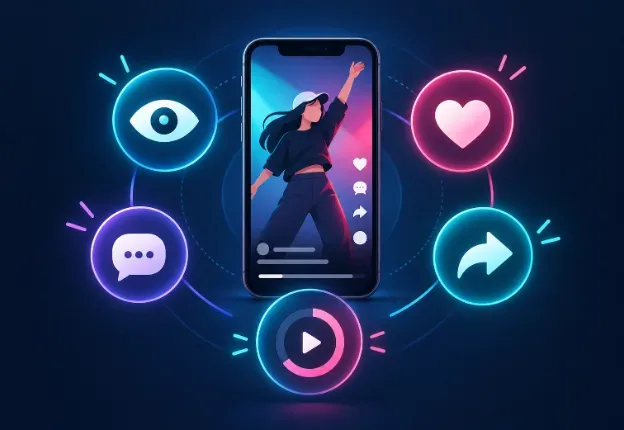
TikTok Views vs Engagement: What Counts and How to Measure Results
More TikTok views do not always mean more likes, followers or sales. Learn how to measure engagement, compare promotion options and assess campaign results alongside delivery and refill coverage.
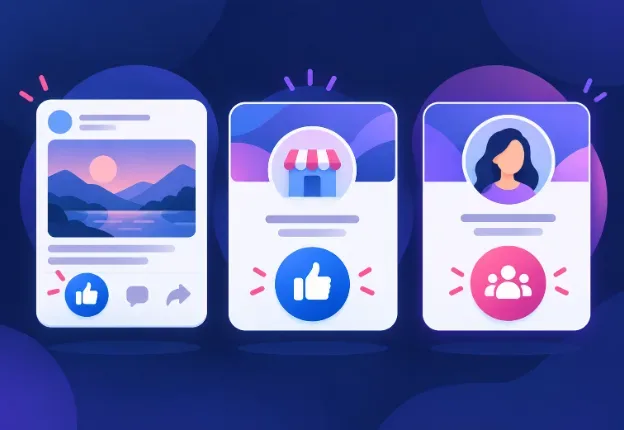
Facebook Post Likes, Page Likes and Followers: What’s the Difference?
Facebook post likes, Page likes and followers describe different actions. This guide explains what each metric means, how to identify the right destination link, and how to choose between content likes and Page or profile follower services.

