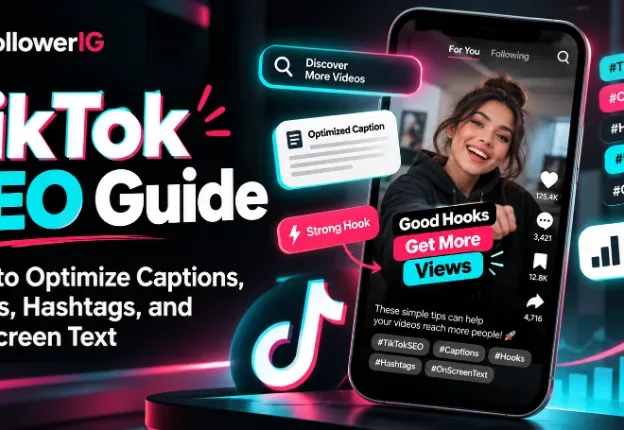
TikTok SEO Guide: How to Optimize Captions, Hooks, Hashtags, and On-Screen Text
TikTok SEO is no longer only about hashtags. To get discovered, your videos need clear keywords in captions, spoken hooks, on-screen text, hashtags, and profile signals. This guide explains how to optimize every part of your TikTok content for better search visibility and stronger engagement.
Summarize This Article with AI
TikTok is no longer just a short-form video app. For many users, it has become a search engine for product reviews, tutorials, trends, recommendations, local businesses, and quick answers. People now search directly inside TikTok for things like “best skincare routine,” “Instagram growth tips,” “small business packaging ideas,” or “how to edit reels.”
This change makes TikTok SEO important for creators, brands, and businesses. If your videos are optimized properly, they have a better chance of appearing in TikTok search results, suggested videos, and topic-based recommendations. The goal is not to trick the algorithm. The goal is to help TikTok clearly understand what your video is about and who should see it.
What Is TikTok SEO?
TikTok SEO means optimizing your video content so it can be discovered through TikTok search and recommendations. It includes the keywords you use in your caption, the words spoken in your video, your on-screen text, hashtags, profile bio, and even audience engagement signals.
For example, if your video is about “how to grow on Instagram,” TikTok should be able to understand that topic from multiple signals. Your spoken intro, caption, hashtags, and text overlay should all support the same theme.
Why TikTok SEO Matters
Many creators still depend only on trends, sounds, or random virality. But SEO gives your content a longer life. A trending video may get attention for a few days, but a search-optimized video can continue attracting viewers weeks or months later.
TikTok SEO is especially useful for:
- Educational content
- Product reviews
- How-to tutorials
- Local business marketing
- Social media growth tips
- Beauty, fitness, fashion, tech, and finance content
- Small business and ecommerce content
Start With the Right TikTok Keywords
Before creating your video, think about what your target audience would actually search for. TikTok keywords are usually natural phrases, not just single words. Instead of targeting only “marketing,” a better keyword would be “TikTok marketing tips for small business.”
For creators who want to strengthen visible discussion around selected videos, FollowerIG also offers TikTok comment packages with standard and custom options.
How to Find TikTok Keywords
You can find keyword ideas by using TikTok’s search bar. Start typing your topic and notice the suggestions TikTok shows. These suggestions often reflect real searches from users.
For example, if you type “Instagram growth,” TikTok may suggest related searches like:
- Instagram growth tips
- Instagram growth strategy
- How to grow Instagram followers
- Instagram growth for business
- Instagram algorithm explained
These phrases can become topics for your videos, captions, and on-screen text.
Optimize Your TikTok Captions
Your caption is one of the clearest places to add your target keyword. A strong TikTok caption should explain the topic naturally while encouraging the viewer to watch, save, comment, or take action.
Avoid writing vague captions like:
“You need to know this.”
Instead, write captions that include context:
“Here are 5 TikTok SEO tips to help your videos appear in search and reach the right audience.”
Caption Optimization Tips
- Use your main keyword naturally in the first sentence.
- Keep the caption clear and easy to understand.
- Add a simple call to action when useful.
- Avoid stuffing too many keywords into one caption.
- Match the caption with the actual content of the video.
Create Hooks That Include Search Intent
The first few seconds of your TikTok video matter a lot. A strong hook tells the viewer why they should keep watching. For TikTok SEO, your hook should also make the topic clear.
If your video is about hashtags, do not start with a generic line like:
“Stop scrolling.”
A better hook would be:
“If your TikTok hashtags are not working, here is how to choose better ones.”
This hook tells both the viewer and the platform what the video is about.
Examples of SEO-Friendly TikTok Hooks
- “Here is how to optimize your TikTok captions for search.”
- “These TikTok SEO mistakes may be hurting your reach.”
- “If you run a small business, use this TikTok content strategy.”
- “Here is how to find keywords for your next TikTok video.”
- “Want more profile visits from TikTok? Start with this.”
Use On-Screen Text Strategically
On-screen text is another important TikTok SEO signal. It also helps users understand your content quickly, especially when they are watching without sound.
Your on-screen text should include the main topic or keyword of the video. If your video is about TikTok hashtags, your text overlay could say:
“How to choose better TikTok hashtags”
This is much clearer than using only a vague phrase like “Growth hack.”
Best Practices for On-Screen Text
- Place your main keyword in the opening text overlay.
- Keep text short and readable.
- Use high contrast so the text is easy to see.
- Do not cover important visuals with text.
- Use text to summarize key points in the video.
Choose Hashtags With a Clear Purpose
Hashtags still matter, but they should not be your entire strategy. The best TikTok hashtag strategy combines broad, niche, and topic-specific hashtags.
For example, if your video is about TikTok SEO, you could use:
- #TikTokSEO
- #TikTokMarketing
- #SocialMediaMarketing
- #ContentStrategy
- #TikTokTips
Avoid using unrelated viral hashtags just because they are popular. If the hashtag does not match your video, it can attract the wrong audience and reduce engagement quality.
Simple TikTok Hashtag Formula
Use this basic formula for most videos:
- 1 main topic hashtag
- 2 niche-specific hashtags
- 1 audience-focused hashtag
- 1 broader discovery hashtag
For example, a video about Instagram growth could use:
#InstagramGrowth #SocialMediaTips #CreatorTips #DigitalMarketing #ContentStrategy
Say Your Keywords in the Video
TikTok can understand spoken words in videos. This means the words you say can support your SEO. If your video is about “TikTok SEO,” say that phrase naturally in your introduction.
For example:
“In this video, I will show you how TikTok SEO works and how to optimize your captions, hooks, hashtags, and on-screen text.”
This reinforces the topic clearly and makes your content easier to categorize.
Optimize Your TikTok Profile
Your profile also helps TikTok and users understand your niche. If your account is about social media marketing, your username, display name, bio, and content should reflect that clearly.
Profile Optimization Checklist
- Use a clear profile name related to your niche or brand.
- Add your main topic in your bio.
- Use a professional profile image or logo.
- Include a link if your account is eligible.
- Keep your content theme consistent.
For example, instead of writing a vague bio like “Helping you grow,” write something more specific:
“Social media marketing tips for creators, brands, and small businesses.”
Improve Engagement Signals
SEO is not only about keywords. TikTok also looks at how users interact with your content. If people watch your video fully, save it, share it, comment, or visit your profile, these are positive signals. For creators and brands looking to improve their overall presence, combining strong content with effective TikTok growth strategies can help build better visibility over time.
To improve engagement, your content should deliver what the hook promises. If your hook says “5 TikTok SEO tips,” make sure the video actually gives five useful tips clearly and quickly.
Engagement Tips for TikTok SEO
- Make the first 3 seconds clear and interesting.
- Keep the video focused on one topic.
- Use examples instead of only generic advice.
- Ask a simple question to encourage comments.
- Tell viewers to save the video if it is educational.
Common TikTok SEO Mistakes to Avoid
Many creators understand the basics but still make small mistakes that hurt discoverability. Here are some common TikTok SEO mistakes:
- Using captions that do not explain the video topic.
- Adding too many unrelated hashtags.
- Using trending sounds that do not match the content.
- Creating vague hooks with no clear search intent.
- Ignoring on-screen text.
- Changing niches too often.
- Creating content for views instead of the right audience.
TikTok SEO Example
Let’s say you want to create a video about improving Instagram engagement. A weak version would look like this:
- Hook: “You need this tip.”
- Caption: “Try this today.”
- On-screen text: “Growth hack”
- Hashtags: #viral #fyp #trending
A better SEO-optimized version would look like this:
- Hook: “If your Instagram engagement is low, fix these 3 things first.”
- Caption: “Use these Instagram engagement tips to improve saves, shares, and profile visits.”
- On-screen text: “3 Instagram engagement tips”
- Hashtags: #InstagramEngagement #InstagramGrowth #SocialMediaTips #CreatorTips
The second version is much clearer. It tells TikTok what the video is about and gives users a stronger reason to watch.
Final Thoughts
TikTok SEO is about clarity. Your captions, hooks, hashtags, spoken words, and on-screen text should all point toward the same topic. When TikTok understands your content, it becomes easier to show it to people who are already interested in that subject.
Creators who are building their presence across multiple platforms can also explore different social media growth services depending on their goals, audience, and platform strategy.
Do not optimize only for views. Optimize for the right audience. A smaller number of targeted viewers can be more valuable than random viral traffic that never follows, clicks, saves, or buys.
If you want stronger TikTok growth, start by choosing clear keywords, creating useful videos, and making every part of your content easier to understand. That is how TikTok SEO turns short videos into long-term discovery assets.
Was this helpful?

Sami Khan
I am a content writer specializing in influencer marketing and digital brand growth. I decode creator economy trends, campaign strategies, and audience engagement to help brands build authentic partnerships that actually convert. My goal is to turn the noise of social media into actionable insights for modern marketers.
Related articles
Manson Gray’s 4,000 Watch-Hour Order: Her Delivery and Monetization Experience
Manson Gray ordered 4,000 watch hours on 25 September 2026. She reports reaching 4,300 total watch hours and receiving monetization approval on 2 October.
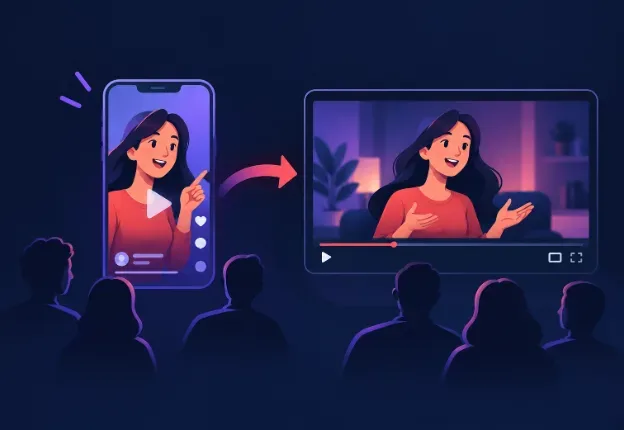
Do YouTube Shorts Help Long-Form Videos? What to Measure
YouTube Shorts can introduce people to your channel, but views and subscribers do not guarantee long-form viewing. Learn how to connect related videos and measure whether your audience follows through.

TikTok Views vs Engagement: What Counts and How to Measure Results
More TikTok views do not always mean more likes, followers or sales. Learn how to measure engagement, compare promotion options and assess campaign results alongside delivery and refill coverage.

